Design Ecosystems for a Complex Future
- For generations, architecture has been viewed as the creation of individual buildings.
- Today, that perspective is no longer enough.
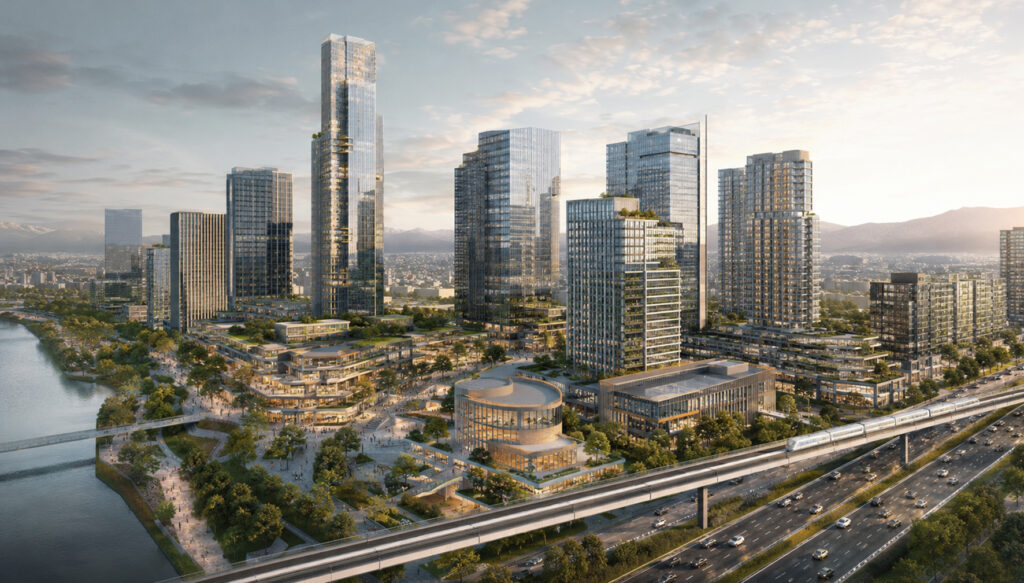
- The challenges shaping our cities—climate change, urbanisation, resource scarcity, infrastructure pressure and rapidly evolving technologies—are interconnected. Buildings no longer operate in isolation. They exist within larger systems that influence mobility, energy, water, ecology, economics and human well-being.
- The future of architecture therefore lies not in designing individual structures, but in creating design ecosystems.
- An ecosystem where every decision contributes to the performance of the whole.
Complexity Is the New Design Challenge
- Modern projects are fundamentally different from those of the past.
- A single development may involve architects, structural engineers, MEP consultants, sustainability specialists, mobility planners, façade engineers, contractors, technology consultants and public authorities.
- Each discipline contributes valuable expertise, yet every additional participant also increases complexity.
- The challenge is no longer designing a building.
- The challenge is orchestrating an ecosystem of knowledge.
- From Individual Disciplines to Integrated Thinking
For decades, project teams have been organised into separate disciplines.
- Architecture.
- Structure.
- MEP.
- Landscape.
- Urban Design.
- Technology.
Each discipline performs exceptionally within its own boundary.
- The future demands something different.
- It requires these disciplines to think and work as one connected system.
- Successful projects are no longer measured by the excellence of individual components.
- They are measured by how intelligently those components work together.
Design Is Becoming Information
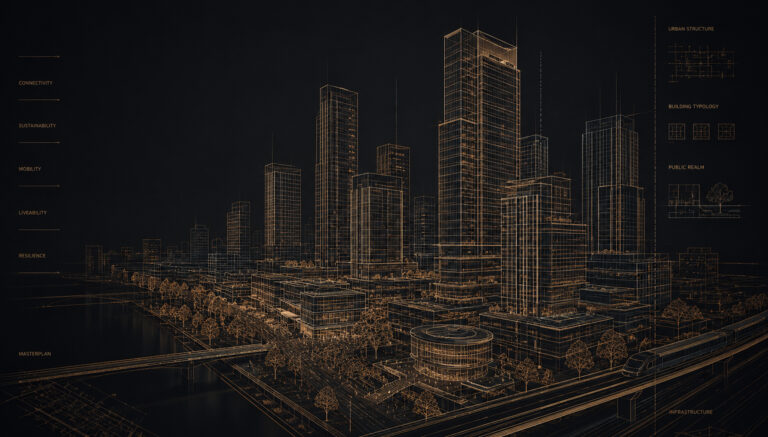
- Buildings are increasingly shaped by information.
- Digital workflows, Building Information Modeling (BIM), simulation tools, computational design and digital twins are changing the way projects are conceived and delivered.
- Yet technology alone is not the transformation.
- The real transformation is the ability to connect information across the entire project lifecycle.
- Information becomes the common language through which every stakeholder collaborates.
- This is where intelligence emerges.
- Beyond Buildings
- Future cities will not be judged solely by iconic architecture.
They will be evaluated by how effectively they manage:
- Mobility
- Water
- Energy
- Biodiversity
- Climate resilience
- Public health
- Social inclusion
- Economic productivity
- Architecture therefore becomes one part of a much larger design ecosystem.
- Every project must consider its impact beyond the site boundary.
- The Rise of Regenerative Thinking
- Sustainability has become a minimum expectation.
- The next frontier is regeneration.
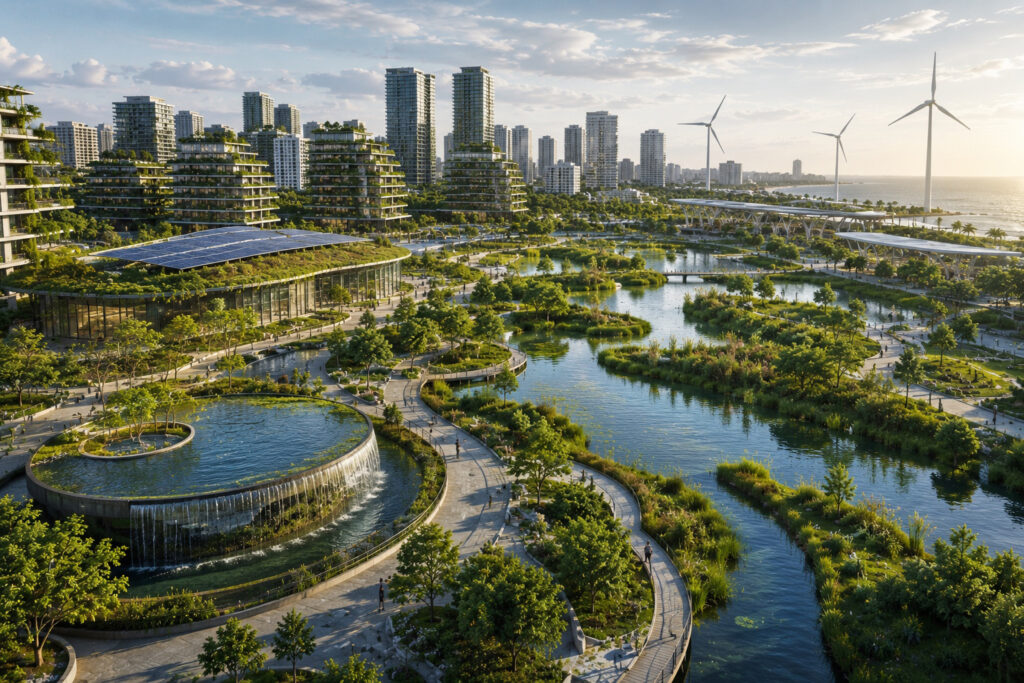
Rather than asking how buildings can reduce harm, we should ask how developments can actively improve the systems they become part of.
- Can they restore ecological balance?
- Can they strengthen communities?
- Can they improve mobility?
- Can they increase resilience?
- Can they create long-term social value?
The most successful projects of the future will not simply minimise negative impact.
- They will create measurable positive outcomes.
- Intelligence Is the Connecting Force
- As complexity grows, information alone is not enough.
- Projects require intelligence.
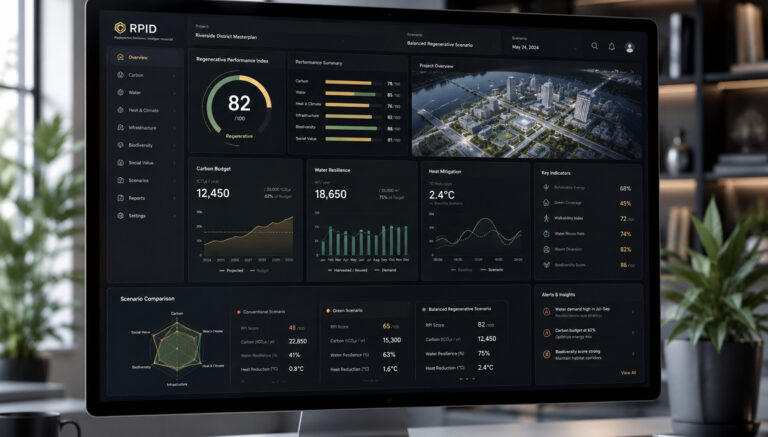
- Intelligence transforms data into insight.
- It connects disciplines.
- It identifies risk before it becomes a problem.
- It improves coordination.
- It enables better decisions.
- Most importantly, it helps diverse teams work towards a common objective.
- This is where embedded technical intelligence becomes invaluable—not as an external service, but as an integral part of the design ecosystem.
Towards a New Design Paradigm
The architecture profession is entering a new era.
The question is no longer:
“How do we design better buildings?”
The more important question is:
“How do we design better systems?”
- Buildings will always remain important.
- But their success will increasingly depend on the ecosystems that surround them.
- Design, infrastructure, technology, environment and communities can no longer be considered independently.
- The future belongs to practices capable of connecting them.