Scaling Architecture Practise through digital delivery
For every successful architecture practice, growth presents an interesting paradox.
- Winning larger commissions, entering new markets and expanding design capabilities are signs of success. Yet growth also introduces new challenges—larger teams, more consultants, tighter schedules, increasing technical complexity and higher client expectations.
- Many firms discover that the systems which supported ten projects are no longer sufficient to manage fifty.
- The question therefore is not simply how to grow.
- It is how to scale intelligently.
- Growth Is Not the Same as Scale
- Increasing project numbers without improving delivery systems often creates organisational stress.
As practices expand, common symptoms begin to appear:
- Design coordination becomes increasingly difficult.
- Project information is spread across multiple platforms.
- Teams spend more time searching for information than creating value.
- Decision-making slows as project complexity increases.
- Senior architects become involved in operational issues instead of focusing on design leadership.
- In many cases, the challenge is not the quality of the design—it is the quality of the delivery system.
- Digital Delivery Is More Than BIM
- Digital delivery is often misunderstood as software implementation.
- In reality, it is about creating an integrated project ecosystem where information flows seamlessly between architects, engineers, consultants and contractors.
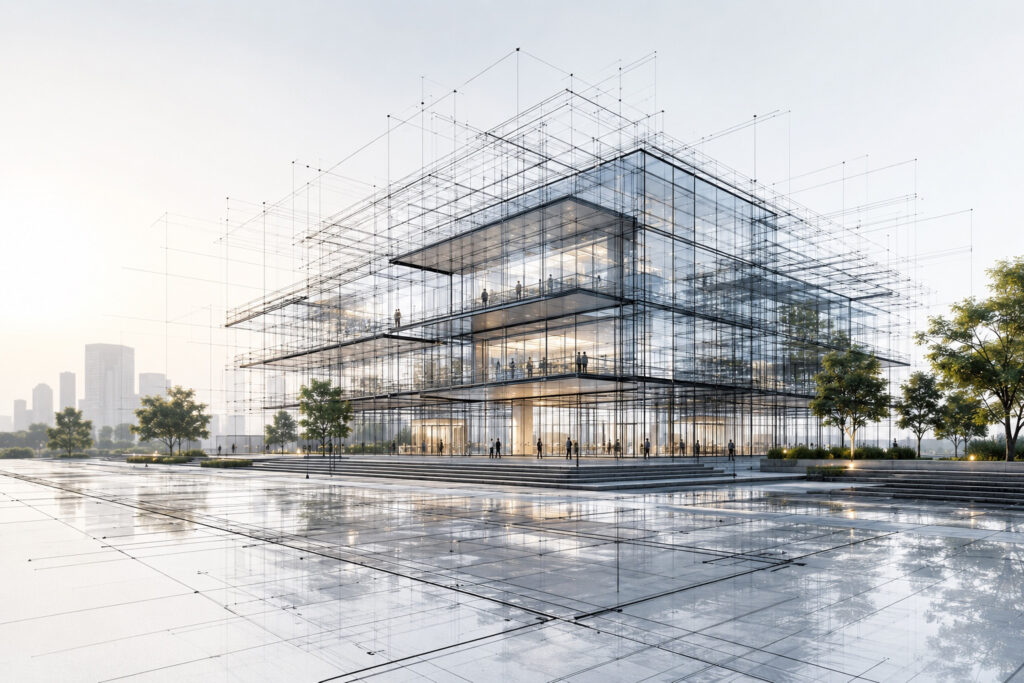

It combines:
- Building Information Modeling (BIM)
- Digital collaboration
- Information management
- Standardised workflows
- Quality assurance
- Multidisciplinary coordination
- The objective is not simply producing digital models.
- The objective is delivering projects with greater clarity, consistency and confidence.
- Building Capacity Without Increasing Complexity
- One of the greatest advantages of digital delivery is that it allows architecture firms to grow without proportionally increasing operational complexity.
Well-designed digital workflows enable practices to:
- Deliver multiple projects simultaneously.
- Maintain consistent documentation standards.
- Improve collaboration across distributed teams.
- Reduce coordination errors.
- Increase productivity without sacrificing design quality.
- Growth becomes systematic rather than reactive.
- The Role of Embedded Technical Intelligence
- As projects become more technically demanding, architecture firms increasingly rely on specialist partners who integrate directly into their delivery ecosystem.
Rather than functioning as external drafting resources, embedded technical teams strengthen project delivery by supporting:
- BIM implementation
- Documentation standards
- Multidisciplinary coordination
- Information management
- Quality assurance
- Digital workflows
- This allows design teams to focus on what they do best—creating exceptional architecture.
- From Information to Intelligence
- The future of architecture will not be defined by the amount of information produced.
- It will be defined by the quality of decisions enabled by that information.
Digital delivery transforms project data into actionable intelligence by helping teams:
- Identify coordination risks early.
- Evaluate alternative design solutions.
- Improve communication across disciplines.
- Support informed project decisions.
- Reduce uncertainty throughout the delivery process.
- Technology becomes an enabler of better leadership—not a replacement for it.
- Scaling with Confidence
- Successful practices recognise that growth requires more than additional people.
- It requires stronger systems.
- Digital delivery creates a foundation where people, processes and technology work together as a unified ecosystem.
When implemented effectively, architecture firms can:
- Pursue larger and more complex commissions.
- Expand into new markets.
- Deliver projects more consistently.
- Improve client confidence.
- Protect design quality while increasing capacity.
- The result is sustainable growth supported by intelligent delivery.
- Looking Ahead
- Architecture is becoming increasingly collaborative, data-driven and multidisciplinary.
- The practices that thrive will not necessarily be the largest.
- They will be the ones that build resilient delivery systems capable of adapting to greater complexity without losing creative focus.
- Scaling an architecture practice is no longer about simply adding resources.
- It is about building the digital foundations that allow excellence to grow.